A memorial to naval rum
Three centuries of rum, abolished in a day
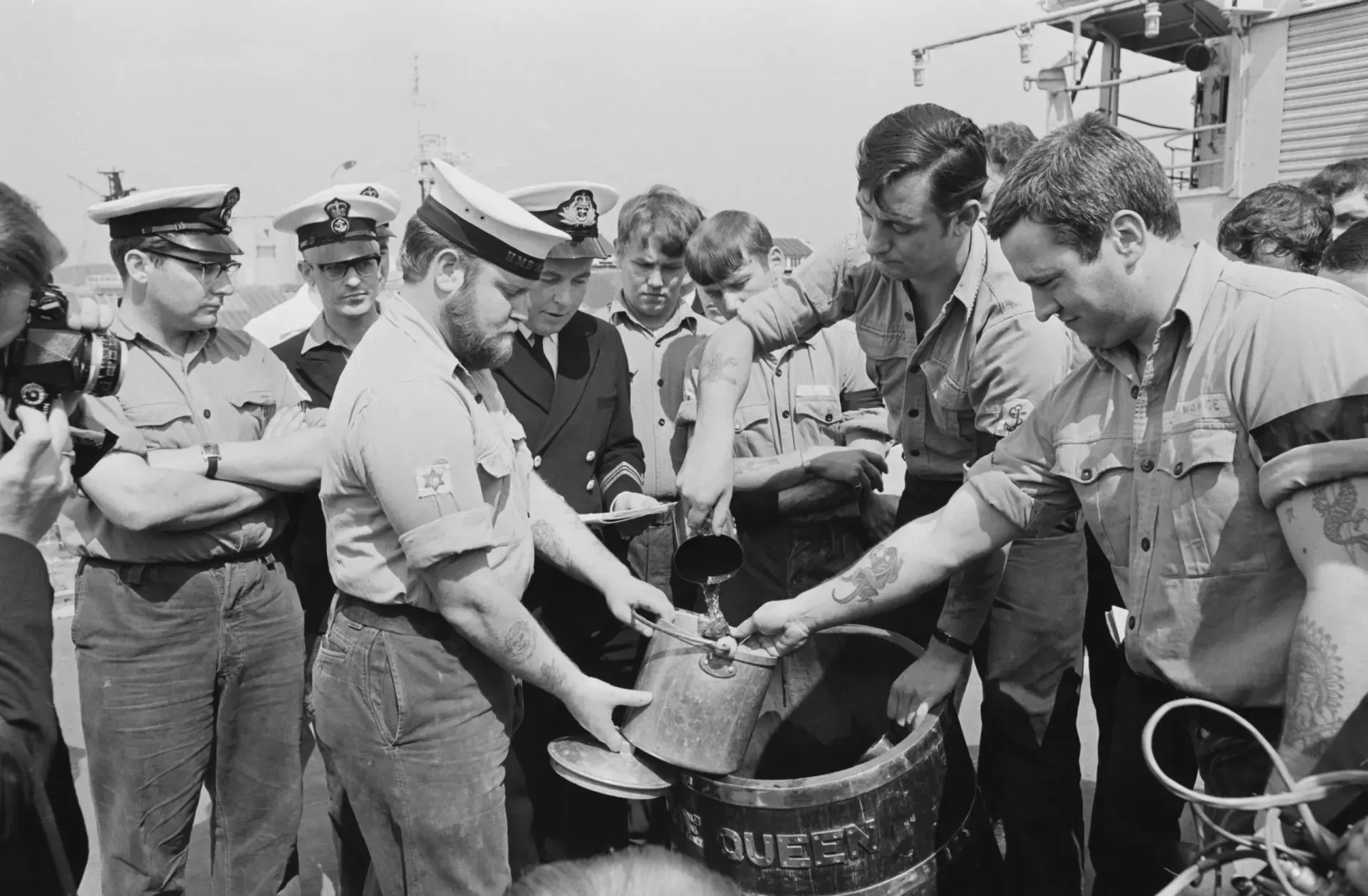
For more than three hundred years, every sailor in the Royal Navy received a daily ration of rum. Then came 31 July 1970: “Black Tot Day”, the day the tradition was served one last time. This is its story.
Ship's ledger
- Navy
- Royal Navy
- Ration
- “the tot” — 1/8 imperial pint
- Pipe
- “Up Spirits”, at noon
- Origin
- West Indies, mid-17th c.
- Last day
- 31 July 1970
Next Black Tot Day
Every 31 July, we raise a glass to the memory of the tot.
A spirit written into naval discipline
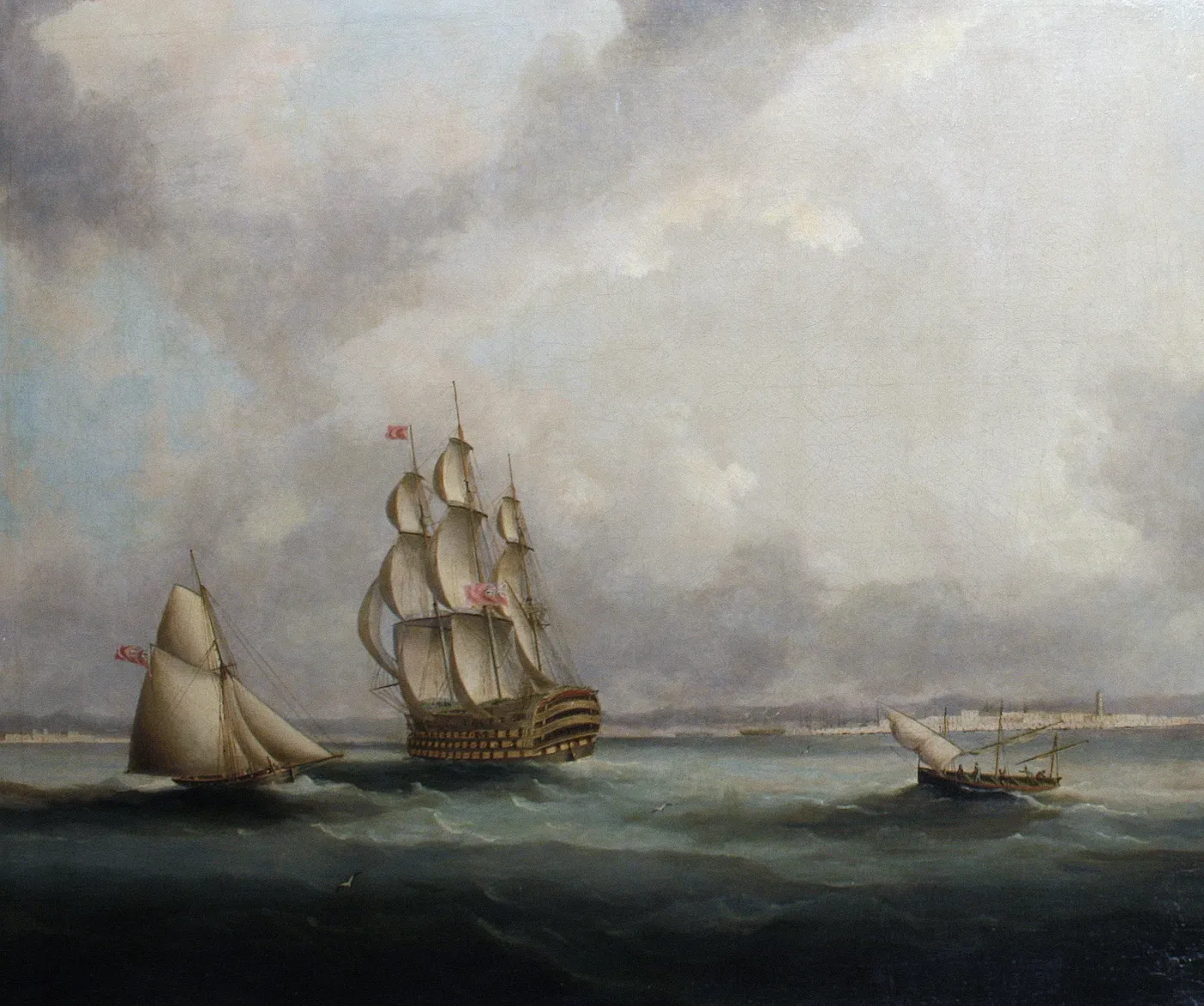
In the British fighting navy, rum was never merely a drink: it was an institution — codified, measured, ritual. Issued every day at a fixed hour, it set the rhythm of life aboard as surely as the watches and the muster. It was served to the sound of an order that became legendary — “Up Spirits” — and its sharing followed an etiquette as strict as any ceremony.
The ration, nicknamed “the tot”, is a direct heir of British expansion in the Caribbean. As the Royal Navy put down roots in the West Indies, local rum replaced the beer and brandy that spoiled on long crossings. For generations of sailors, the cane spirit became at once comfort, payment in kind and a badge of belonging.
31 July 1970: the last ration
By the 20th century, a modern navy — complex weapons, precision machinery, reactors — sat ever more uneasily with a crew drinking strong spirits on duty. After decades of debate, the Admiralty decided: the ration would go. On 31 July 1970, sailors drank their final tot. Many wore black armbands; on some ships mock funerals were held and cups were thrown into the sea. The press christened the day “Black Tot Day”.
The end of the tot was not felt as a health measure, but as the loss of a bond — the one that tied the sailor of today to three centuries of naval history.
A legacy still alive
The ration is gone, but its mark remains. It shaped a style of rum — the Navy Rum, powerful and blended — and a benchmark strength, the famous “Navy strength” at 54.5% ABV. It also left a recipe that became universal: grog, rum cut with water, born of an admiral's decision. To this day, every 31 July, enthusiasts and old sailors raise a glass to the memory of the tot.
Three centuries in seven dates
-
1655
Rum comes aboard
The capture of Jamaica brings the Royal Navy into contact with West Indian rum, which gradually replaces the beer and brandy spoiled by the crossing.
-
1731
A codified ration
Ship regulations officially set the daily half-pint of rum as the equivalent of the beer or wine ration.
-
21 August 1740
The birth of grog
Admiral Edward Vernon, “Old Grog”, orders the rum to be cut with water and served twice a day to curb drunkenness aboard.
-
1850
The dose is reduced
An Admiralty committee brings the tot down to one eighth of an imperial pint and abolishes the officers’ ration, deemed unnecessary.
-
20th century
The navy modernises
Electronic weapons, precision machinery and submarines make strong drink on duty ever harder to justify.
-
31 July 1970
Black Tot Day
The last issue of the tot. Black armbands, mock funerals and cups thrown into the sea: sailors bury three centuries of tradition.
-
Today
A living memory
Every 31 July, enthusiasts and veterans commemorate Black Tot Day; the “Navy” style keeps the taste of the navy’s rum alive.