The ration fell silent in 1970 — but its spirit can still be drunk. Six bottlings carry on the gesture of the tot: the multi-island blend, drawn at Navy strength.
The last tot served on 31 July 1970 did not take the taste
of navy rum with it. That taste — a dark blend of rums from several islands, bottled high
in strength — outlived the end of the ration and keeps inspiring bottlers. Today it
survives in two forms.
On one side, tribute brands recomposing the Navy
style in their own way: the same provenances, the same shipboard strength, the same
sturdy character. On the other, genuine casks and flagons rediscovered —
service rums stamped Royal Navy or R.A.S.C — rebottled decades later. Here are six
landmarks, from the rarest to the most accessible, for anyone who wants to taste what the
navy's rum essentially was.
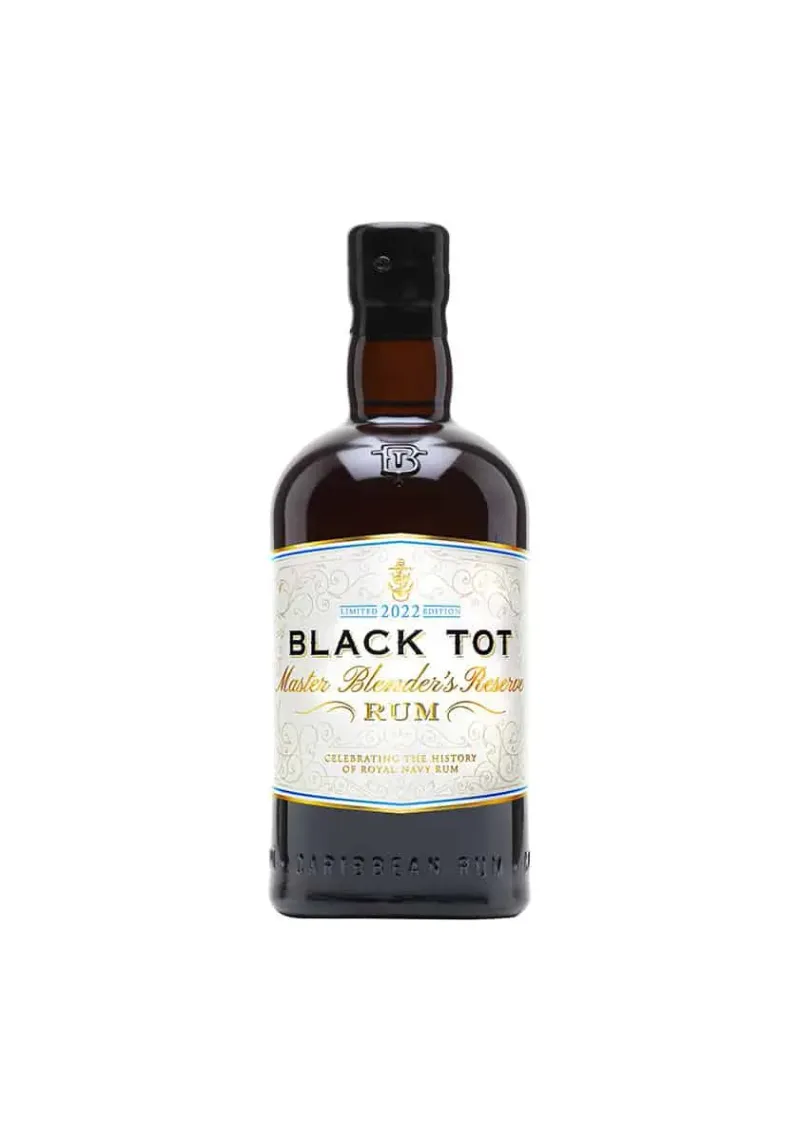
The brand was born in 2007 of an encounter: a Royal Navy veteran showed Sukhinder Singh a
genuine flagon of period ration rum — an imperial gallon in glazed stoneware, still sealed
with wax. From that treasure came the Last Consignment, a blend of ration rums from
the 1950s and 1970, bottled at 54.3% in some three thousand bottles. Since then, every
31 July, the house unveils a Master Blender's Reserve at 54.5%, signed by master
blender Oliver Chilton. The 2022 edition marries four regional super-blends — Jamaica,
Barbados, Guyana, Trinidad — around a “perpetual reserve” borrowed from the Champagne method,
and took a Rum Trophy at the IWSC.
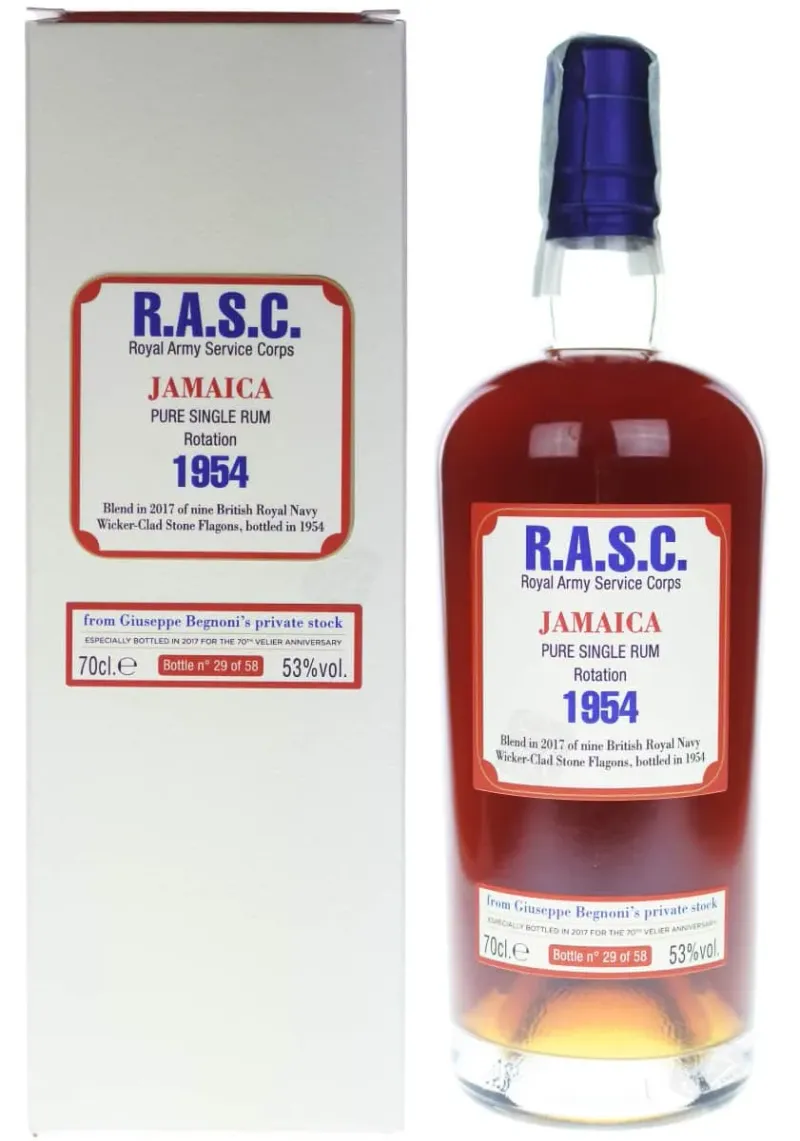
This bottling is the fruit of a collaboration between Velier and the collector Giuseppe
Begnoni. It is a Jamaican rum from 1954, bottled at 53°, in a series of barely fifty-eight
bottles. The story lies in the initials R.A.S.C: when the navy sold off its stoneware military
flagons in 1980, six of them, stamped by the logistics corps, were bought back and united into
a single blend in 2017. The profile, all restraint, unfolds leather, blond tobacco, tonka
bean, cooked fruit and dark chocolate. A second edition (Batch 2) followed, also available.
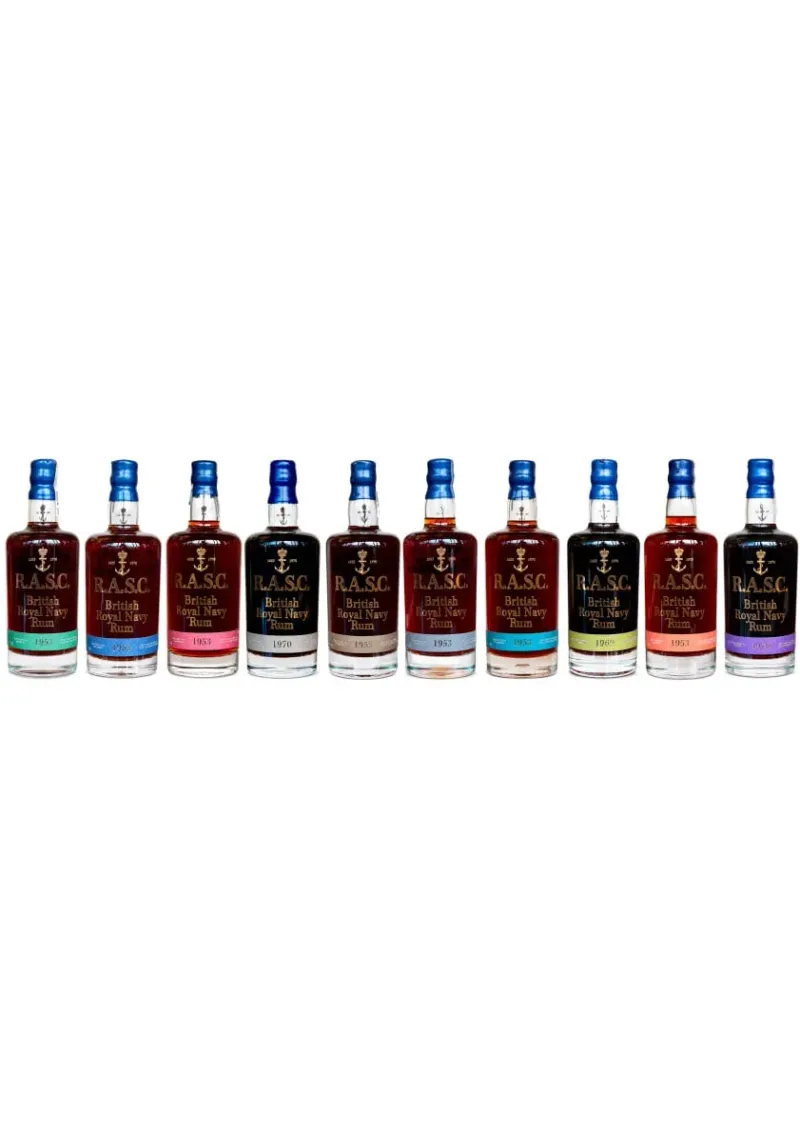
Signed by the Polish bottler Colours of Rum (Wealth Solutions), this collector's set
brings together ten bottlings of Jamaican rums once destined for the Royal Navy. The vintages
run from 1953 to 1970, at strengths between 51.7 and 53.9° depending on the flagon. A
delicious detail for the history lover: each label states the port to which the rum was to be
shipped — Antwerp, Hamburg, Berlin, Hohne. An extreme rarity, since only twelve sets exist in
the world.
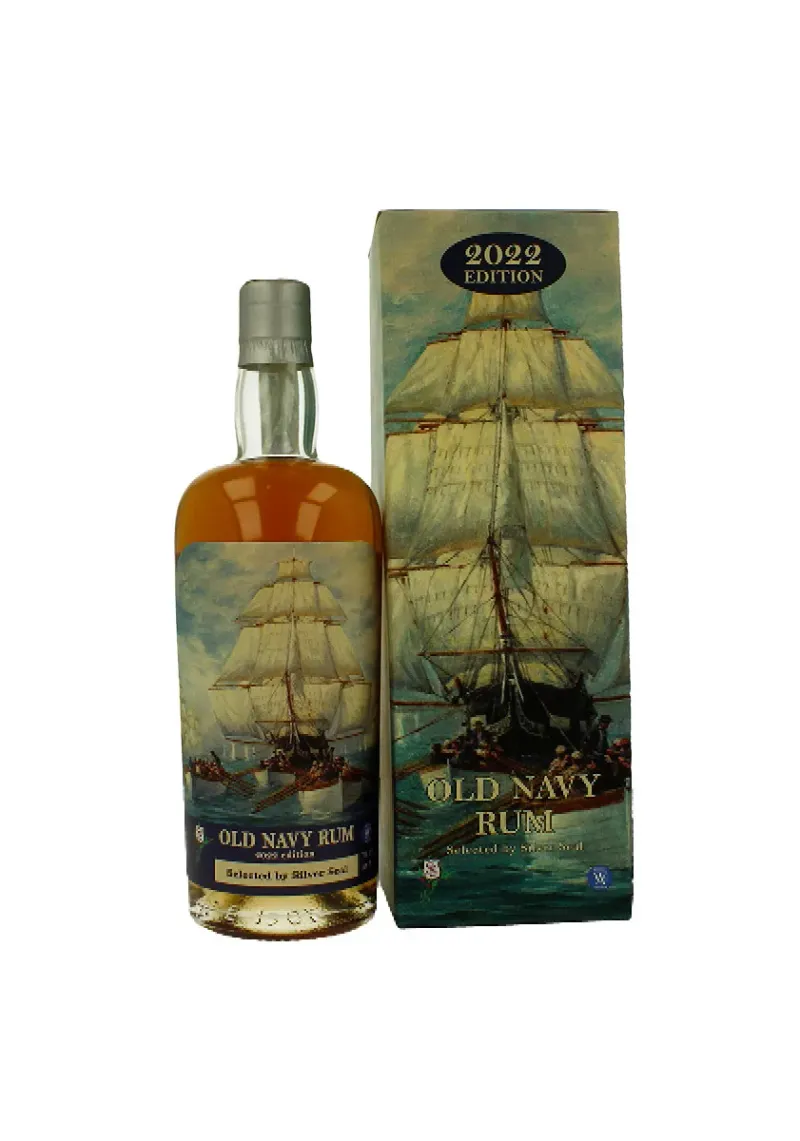
The Italian independent Silver Seal signs an avowed tribute here. The cuvée unites
Caribbean rums — Demerara from Guyana, Barbados and Jamaica — in a blend finished in sherry
casks. The strength, set at 57%, points straight back to the old Navy strength, the one that
would still let gunpowder ignite. The series is numbered and limited to nine hundred and
eighty bottles.
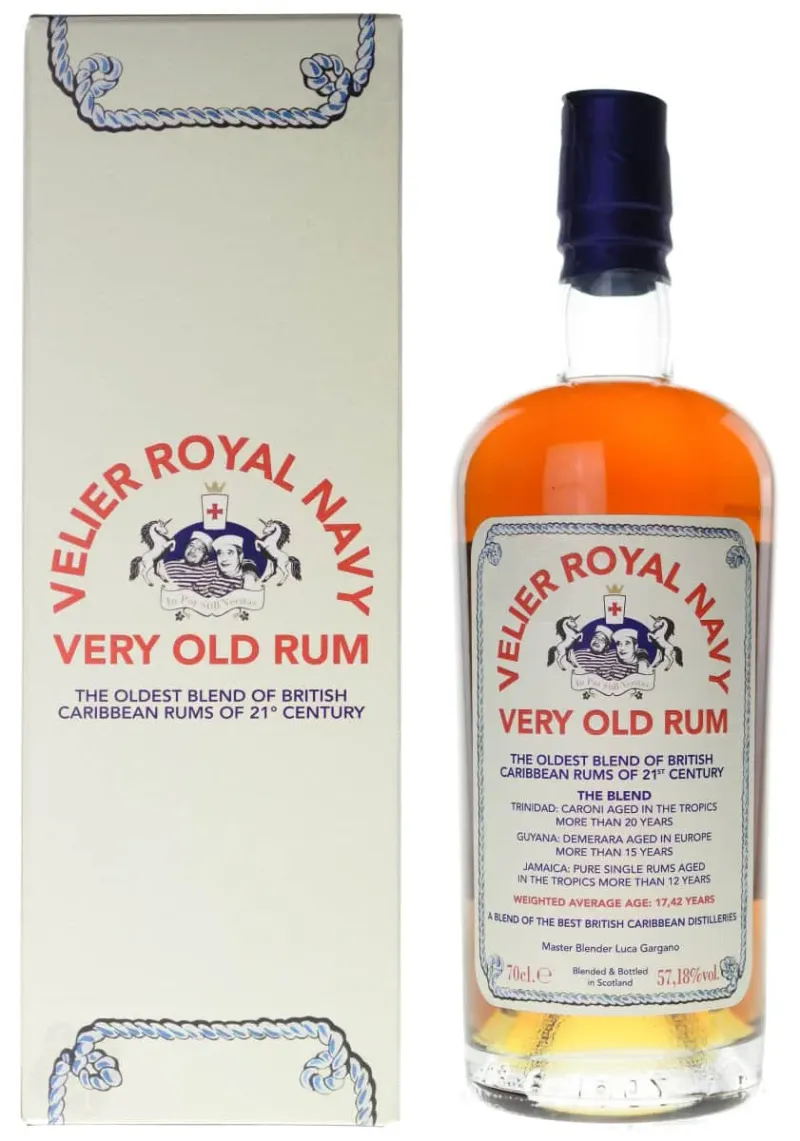
Here is Luca Gargano's reading of the style — the man behind Velier. His Royal Navy
Very Old Rum blends a twenty-year-old Caroni from Trinidad, a fifteen-year-old Guyana rum
and a twelve-year-old Jamaican pure single, bottled at 57.2°. The presence of Caroni — the
closed distillery become legend — makes this bottle a double tribute: to the navy, and to
Trinidad's “ghost rum”.
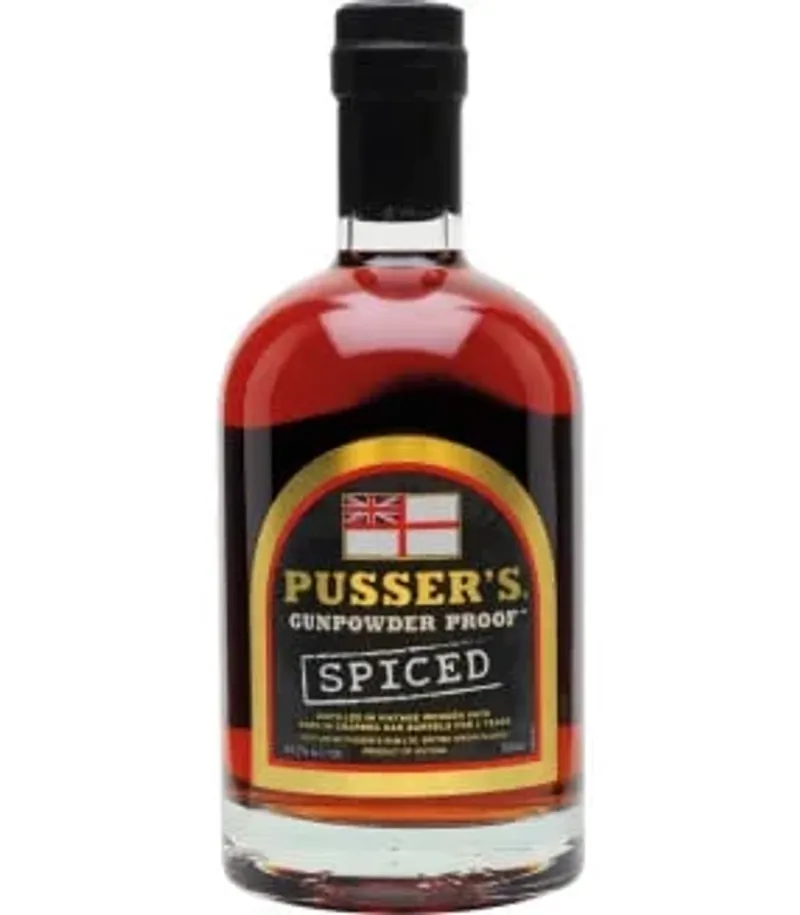
Founded in 1979 by Charles Tobias, the house of Pusser's obtained the licence to the
Admiralty's original blending recipe — the very one that made up the tot. Its name comes from
purser, the officer in charge of victuals aboard, which sailors pronounced “pusser”.
The brand donates part of its sales to the Royal Navy sailors' welfare fund, the “Tot Fund”.
The range runs from the Gunpowder Proof at 54.5% to the Blue Label at 40%,
by way of a fifteen-year-old and overproof versions.
A ration cannot be rebottled. But a taste can: that of a dark, blended rum, drawn at the
strength of gunpowder. It is that inheritance these six bottles pour back into the glass.