Chapter I
I / VI
The Royal Navy rum ration
Before it was a myth, naval rum was a mechanism: a regulated quantity, a fixed hour, a ceremony. To understand the tot is to read a British sailor's day backwards.
From beer to rum
In the early days of the English navy, the crew's regulation drink was beer: a gallon per man per day. But beer spoiled quickly in the tropics, and long crossings forced the search for more stable liquor. Wine and brandy took over, depending on the theatre of operations.
Everything changed when the Royal Navy settled permanently in the Caribbean in the middle of the 17th century. The capture of Jamaica, in 1655, brought the navy into direct contact with locally produced rum. Cheap, plentiful and heat-resistant, it naturally became the ration of sailors stationed in the West Indies before spreading to the whole fleet.
How much rum did a sailor get?
The daily ration had a nickname: “the tot”. Until 1740, each man received half a pint of neat rum, served twice a day — a custom which, on ships where the slightest mishandling could be fatal, posed an obvious problem of discipline and safety. It was precisely to remedy this that Admiral Vernon ordered, that same year, that the rum henceforth be cut with water: grog had just been born.
Over the centuries the Admiralty reduced the dose several times. By the 20th century the daily tot was set at one eighth of an imperial pint — roughly 70 millilitres of rum — mixed with water for most ratings. That gradual reduction tells, in itself, the story of the standing tension between tradition and the demands of an ever more technical navy.
“Up Spirits”: the noon ritual
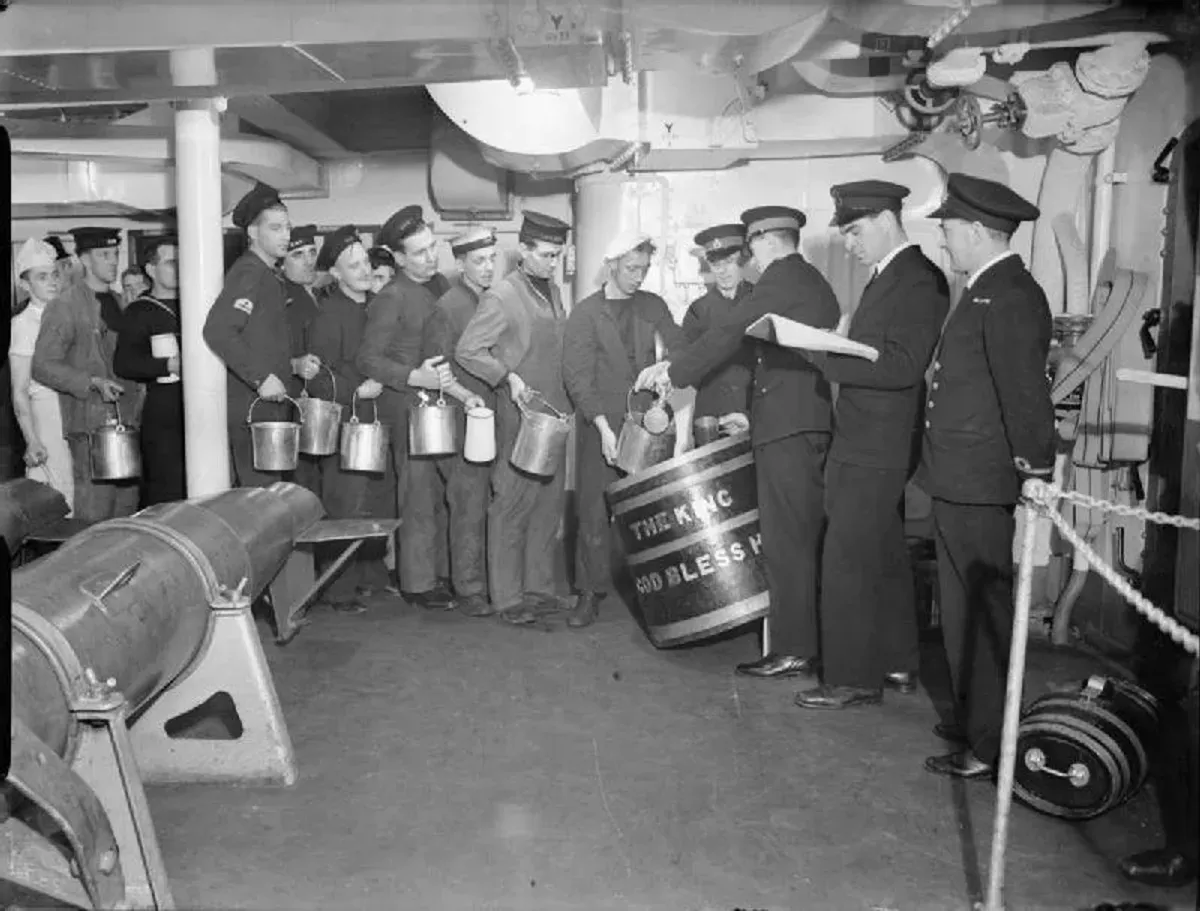
The issue was anything but improvised. As noon approached, the boatswain's call rang out with the order “Up Spirits” — the signal that the rum was to be fetched from the locked liquor hold, the spirit room. A crew joke often answered, under the breath: “Stand fast the Holy Ghost.”
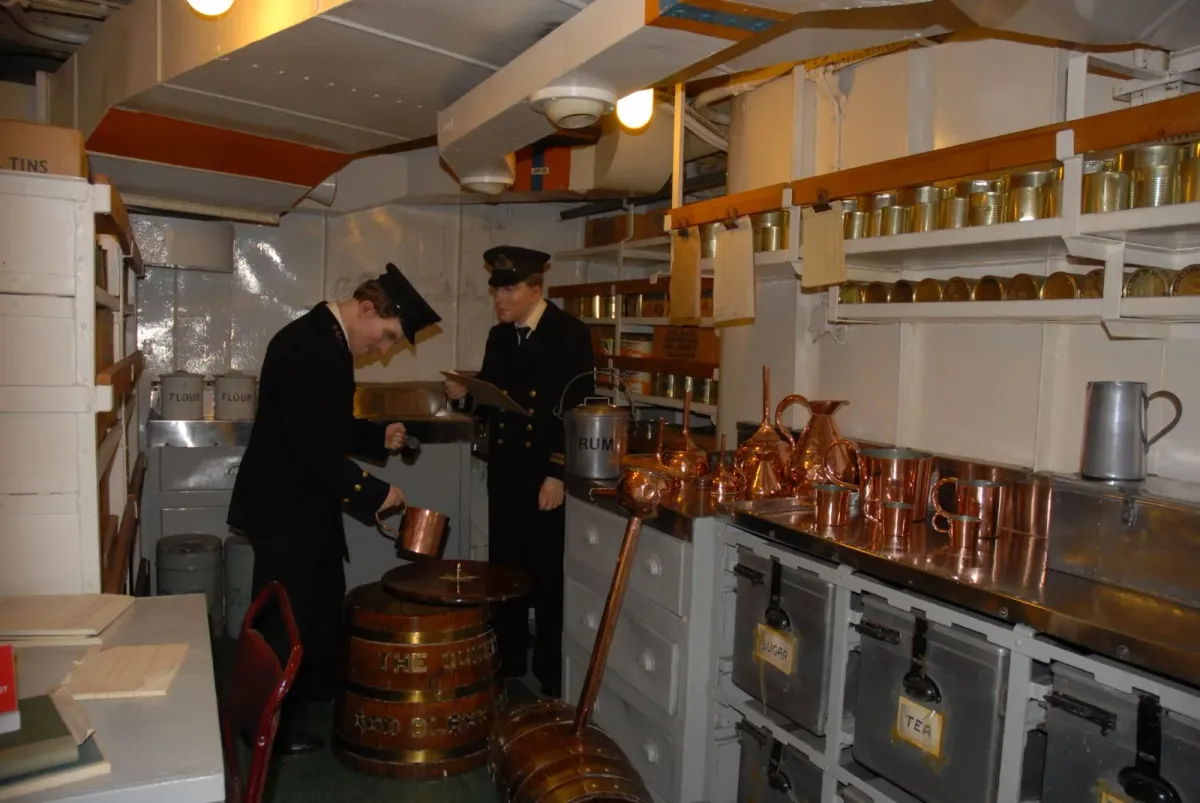
The rum was measured with dedicated instruments, under an officer's supervision, then issued mess by mess — the mess being the table of men who took their meals together. The sharing followed a strict hierarchy, and every detail counted: nobody joked about another man's share.
“Up Spirits” at noon: for generations of sailors, those two words marked the high point of the day, as much as a hot meal or the end of a watch.
“Sippers”, “gulpers” and debts of honour
A whole social code grew up around the tot. A sip offered to a shipmate to thank him for a favour was called a “sippers”; a more generous swig, a “gulpers”. Giving up one's entire ration — one's “grandeur” — was the strongest mark of gratitude a man could offer aboard.
This system of small liquid debts wove bonds between the men: a helping hand was repaid with a sip, a friendship sealed with a share. The ration was not merely a private pleasure; it held the crew together.
Officers, abstainers and “grog money”
Not everyone drank their ration. Officers received their rum neat and kept their own stores. Sailors who chose not to claim their tot — for reasons of health, conviction or thrift — could draw a cash allowance instead, the “grog money”. The ration was thus also, in its way, a matter of money and ship's bookkeeping.