Chapter II
II / VI
Black Tot Day, 31 July 1970
On a summer Tuesday, at noon, the Royal Navy served the last tot of its history. That day, sailors mourned a drink — and, through it, a whole way of being aboard.
Why abolish the ration?
As early as the 19th century, voices were raised against alcohol aboard. But it was the modernisation of the navy in the 20th century that made the tot untenable. Warships had become technological platforms: electronic weapons systems, sophisticated propulsion, submarines. Asking men to operate those machines after drinking strong spirits posed a safety problem that could no longer be ignored.
The question was put to the naval authorities and debated at the highest level. The conclusion prevailed: a daily ration of alcohol no longer had a place in a modern navy. The date of the final issue was set for 31 July 1970.
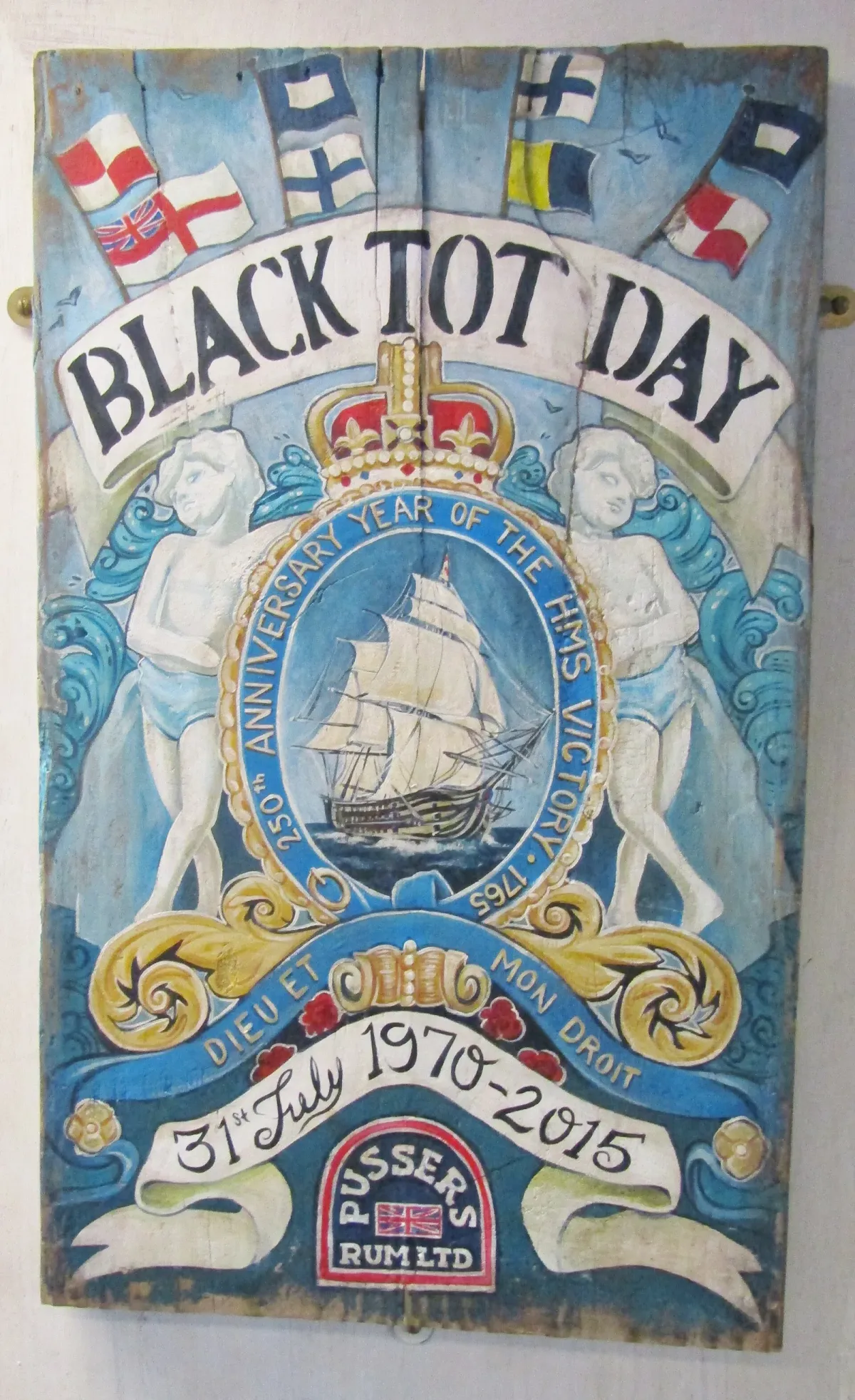
How the last day unfolded
On the morning of 31 July 1970, the order “Up Spirits” rang out as it did every day. But everyone knew it was the last time. On many ships the mood swung between solemnity and cheerful defiance. The measure served that day was issued with particular care: men took their time drinking a piece of history.
Eyewitness accounts describe scenes that became famous: sailors wearing black armbands in mourning, cups thrown overboard after the final glass, even small improvised funeral ceremonies — a symbolic coffin, a procession, the burial of the tot. The British press seized on the event and gave it its name: “Black Tot Day”.
It was not just a ration being buried: it was a salute to a tradition born in the age of sail, dying in the age of missiles.
A mourning that meant something more
Why so much emotion over a few centilitres of rum? Because the tot had never been just a drink. It was the fixed point of the day, the moment of fellowship, the symbol of a navy in which everything was shared — including the “sippers” and “gulpers” offered between shipmates. To abolish it was to touch the invisible bond that held the crew together.
For many veterans, Black Tot Day marked the end of a certain spirit of the ration and, more broadly, of an era. The sailors understood the safety arguments; they mourned the gesture nonetheless.
An anniversary that became a ritual
More than fifty years on, 31 July has become a date in the rum lover's calendar. Every year, distilleries, bars and enthusiasts commemorate Black Tot Day by raising a glass to the memory of the tot. In 2020 the fiftieth anniversary was marked with particular ceremony: under the name “Black Tot 50”, the event was paired with a charity, the Royal Navy & Royal Marines Charity, extending the old bond between ship's rum and sailors' mutual aid. The day has also given its name to bottlings and fed a whole imagination around naval rum: proof that an abolished tradition can live on in memory — and in taste.